


There are homes that never had central heating. And that usually means one thing: every winter becomes a “workaround”, with stoves, heaters, different temperatures in each room, and constant concern about energy consumption.
In this detached house, we started from absolute zero and delivered a complete, modern heating system designed for comfort and efficiency.
What we did in practice
This was not “just a simple equipment replacement”. It was the construction of a complete system:
- We installed a new hydraulic network
- We installed radiators for all spaces
- We installed a buffer tank and an expansion vessel
- We completed electrical connections, automation, and system control
- We adjusted the weather compensation curve, so the system operates “smartly” and not unnecessarily
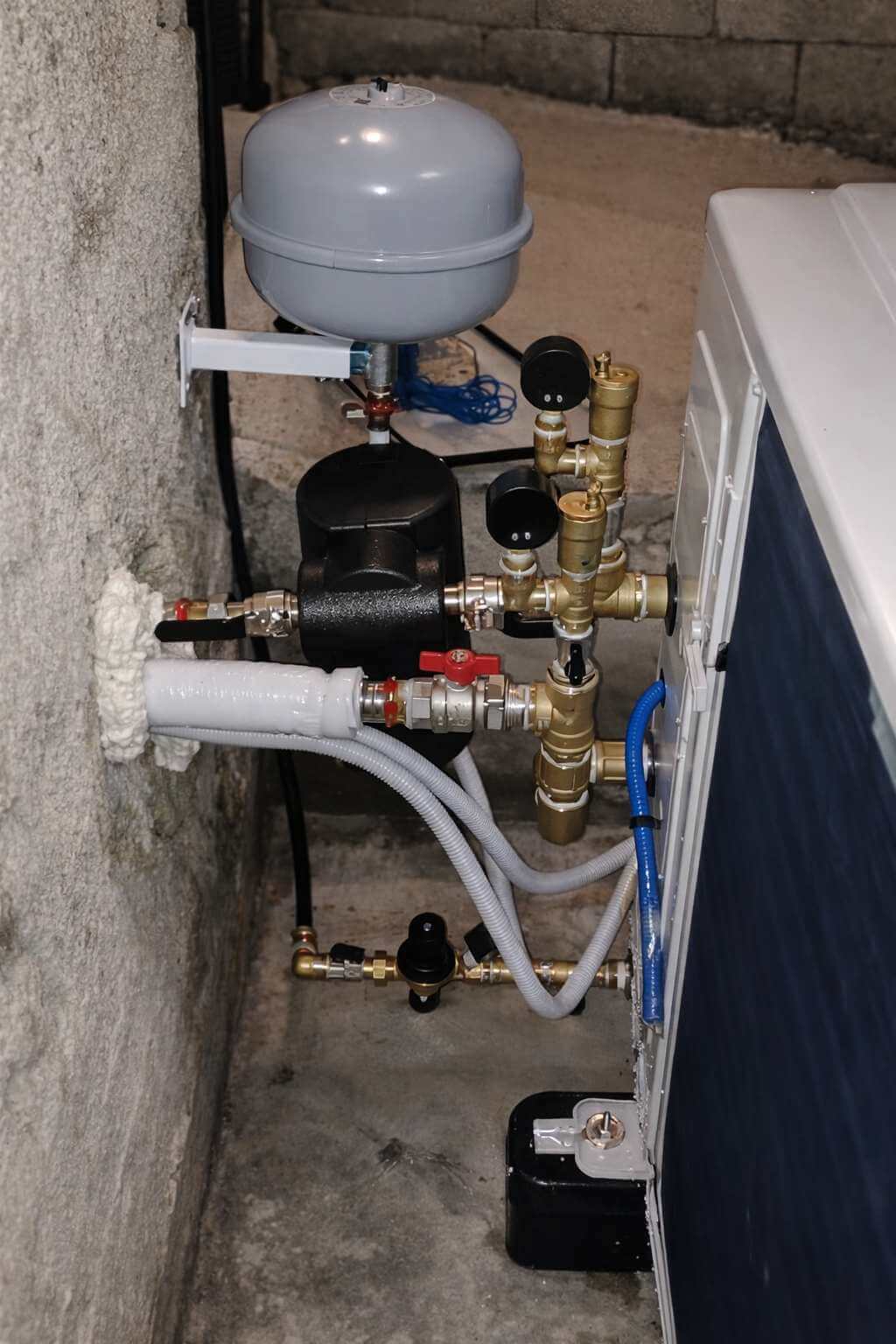

The solution selected
The “heart” of the system is the Olympia Splendid Monoblock SHERPA S2E8, with supply temperature capability up to 60°C and high seasonal efficiency (SCOP ~4+). In simple terms: it’s a solution that can deliver much more heat compared to the energy it consumes—when properly designed and correctly configured.

Before installation, we completed the study
To ensure it wasn’t “just installing a machine”, our work necessarily included:
- Calculation of heat losses per space
- Selection of the correct unit capacity
- Radiator sizing to operate efficiently at lower temperatures
- Hydraulic balancing to ensure all rooms heat properly
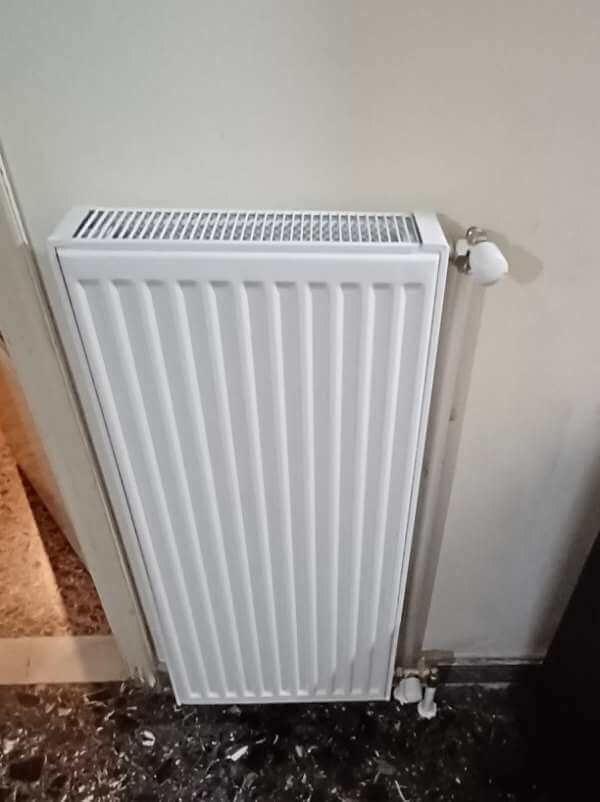

The result that matters in everyday life
✔ Uniform heating in all spaces
✔ Quieter operation and better control
✔ Reduced energy consumption compared to conventional solutions
✔ A home “ready” energy-wise for the coming years
From temporary fixes and uneven heating ➜ to consistent comfort with a modern heat pump system.
Frequently Asked Questions (for homes without central heating)
1) Can a heat pump be installed if there is no existing network?
Yes — as long as a proper study is carried out and the appropriate hydraulic network and radiators are installed.
2) Will all rooms be heated equally?
With proper radiator sizing and hydraulic balancing, heating becomes uniform across all spaces.
3) What is the role of weather compensation?
Weather compensation adjusts the supply temperature according to outdoor conditions, preventing unnecessary energy consumption.
4) Is it “just the machine” or does the installation matter?
Both matter. Proper study, correct settings, and proper hydraulic construction are what make the system truly efficient.
If you have a home without central heating or want an upgrade, we can undertake the study – installation – configuration, ensuring the result is right from day one.